



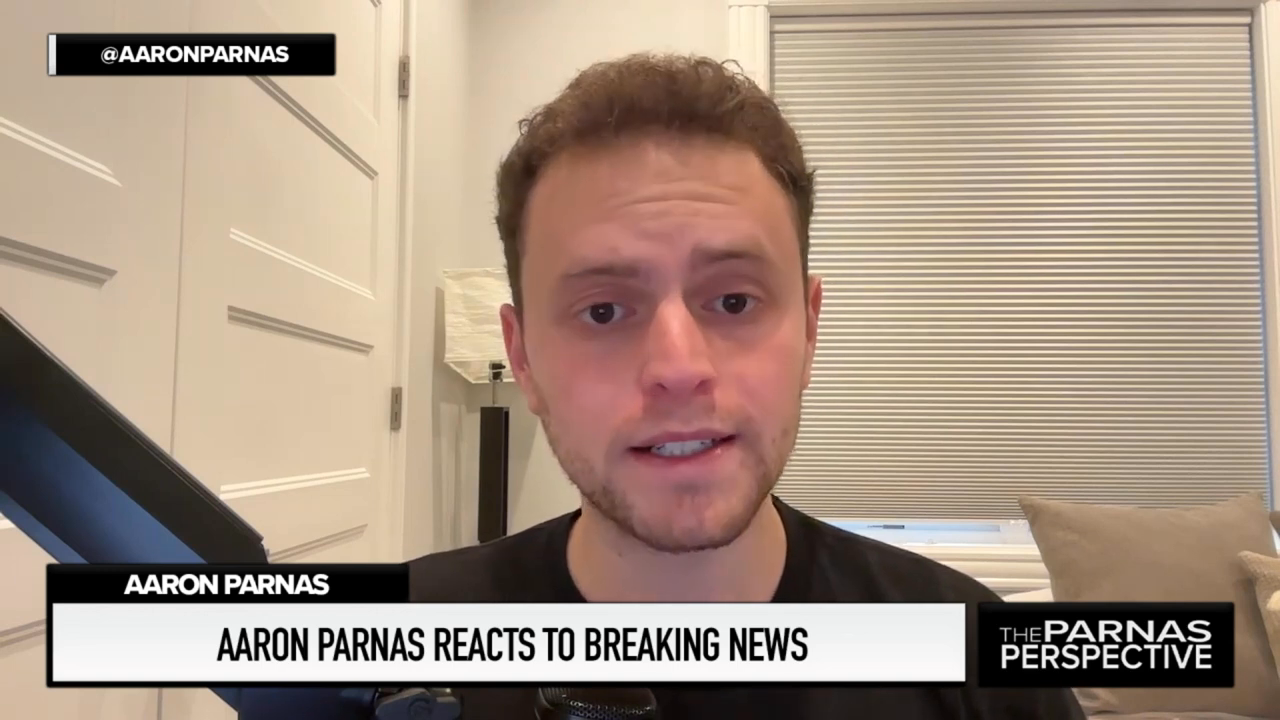
Good evening everyone. Another long week comes to a close, but this one felt different. The tone in Washington seems to be shifting.
Republicans are growing uneasy about the ongoing war effort, and Trump is once again claiming victory in Iran while also looking for an off-ramp, even as he considers sending thousands more troops to the region.
Meanwhile, Elon Musk has been found liable for defrauding investors in a major court decision, and the media landscape is continuing to change in fundamental ways. Trump is praising the FCC chairman for allowing the Nexstar-Tegna merger to move forward, with Nexstar positioning itself as an alternative to what it calls “fake news.” At the same time, CBS is shutting down its radio division and laying off a significant portion of its newsroom.
Independent media has never been more important. As all of this unfolds, there are a few things you should know. I will never be bought by billionaires. I will never cave to any politician or corporation. I will always put you and the truth first.
Subscribe, and let’s build something bigger together.
Here’s the news:
- SCOOP: Campaign finance records reveal that Vivek Ramaswamy’s campaign spent nearly $12,000 on a stay at the ultra-luxury Dorado Beach Ritz-Carlton Reserve in Puerto Rico, tied to a conference appearance he later withdrew from amid controversy. The trip, which also included recreational activities like playing pickleball with Logan and Jake Paul, is raising new questions about how campaign funds were used and the timing of the spending.
- A San Francisco jury found Elon Musk defrauded Twitter investors during his $44 billion 2022 takeover, determining that key tweets about spam and bot accounts were materially false or misleading and contributed to investor losses. The case centered on claims that Musk made these statements to drive down Twitter’s stock price and improve his negotiating position, though the jury did not find him liable for all statements or broader scheme claims.
- CBS News is shutting down its nearly 100-year-old radio division and laying off staff as part of a major restructuring under Bari Weiss, with cuts affecting about 6% of the newsroom. The move marks a significant contraction in legacy media and comes amid declining ratings, internal turmoil, and broader consolidation under new ownership tied to the Ellison family.
- Donald Trump actively praised FCC Chairman Brendan Carr following the approval of the Nextar-Tegna merger, calling him one of the most powerful people in Washington:
- The DEA has designated Colombian President Gustavo Petro a “priority target,” a label used for individuals believed to have a significant impact on the drug trade. U.S. prosecutors in New York are investigating alleged links between Petro’s associates and major trafficking networks, including claims tied to the Sinaloa cartel and potential bribery schemes involving promises to block extraditions of traffickers.
- The NBA champion Oklahoma City Thunder will not make their customary White House visit during their trip to Washington, citing a “timing issue” despite discussions with the White House. The decision follows a long-standing but sometimes politically contentious tradition of championship teams visiting, with similar scheduling or political complications affecting past teams.
- Trump declares victory in Iran war: President Trump said “I think we’ve won,” signaling confidence from the White House even as the conflict continues and key military and geopolitical questions remain unresolved.
- Trump said the U.S. is nearing its military objectives in the Middle East and is considering scaling back operations, adding that other countries could take responsibility for securing the Strait of Hormuz and that doing so would be relatively easy.
- Markets saw broad volatility, with both stocks and bonds declining, gold heading for its worst week in decades, and traders briefly viewing a Fed rate hike as just as likely as a cut, as the S&P 500 logged its longest weekly losing streak in a year.
- CBS News has confirmed that the Pentagon is actively preparing for a possible U.S. ground invasion of Iran, with detailed plans involving the 82nd Airborne Division, Marine Expeditionary Units, and the Army’s Global Response Force. Thousands of Marines and multiple warships are already being deployed to the region, while officials are also planning for detaining Iranian fighters if troops are sent. Trump publicly says he is not planning to send ground troops but has left the option open, underscoring growing escalation behind the scenes.
- The Trump administration is reportedly considering sending thousands of U.S. troops into Iran, with one option involving deploying forces to key ports or islands in the Persian Gulf to help secure shipping routes like the Strait of Hormuz. The move would mark a significant escalation in U.S. involvement, as the strategic waterway—critical to global oil supply—has been a central flashpoint in the ongoing conflict.
- The U.S. is rapidly escalating its military buildup in the Middle East, with a second Marine Expeditionary Unit of roughly 2,200 Marines and three warships now deployed, joining another unit already en route. These amphibious forces, including advanced ships capable of launching F-35 fighter jets, are designed for combat, evacuations, and strategic operations. The deployment comes as the war enters its third week, with at least 13 U.S. service members killed and many more wounded, signaling intensifying conflict even as Trump publicly denies plans for ground troops. This is the response from some in MAGA:
- Trump attacked NATO allies as “cowards” for refusing to join the Iran war, escalating tensions with longtime partners as they resist military involvement despite U.S. pressure to help reopen the Strait of Hormuz and address rising global oil prices.
- Reuters has confirmed that Switzerland suspended arms export licenses to the U.S. and restricted airspace access for Iran war–related military flights, citing neutrality laws. The move reflects deepening global unease with the conflict, as Switzerland also reviews existing U.S. licenses and had already rejected some flyover requests, underscoring increasing international resistance and isolation around the war.
- The World Food Programme is warning that the Middle East conflict could trigger record global hunger levels, with disruptions to energy, shipping, and trade systems expected to drive food insecurity far beyond the region. If the war continues, up to 45 million additional people could face acute hunger, pushing the global total to 363 million and threatening to reverse recent progress in some of the world’s most vulnerable regions.
- A federal judge struck down the Pentagon’s new press policy, ruling in a lawsuit brought by The New York Times that it violated the First Amendment by effectively targeting and excluding disfavored journalists. Read the full ruling here.
- Trump suggested that the Strait of Hormuz will eventually reopen or resolve on its own without direct intervention.
- Canada is rolling out financial aid for farmers and food businesses impacted by surging fertilizer and energy costs tied to the Iran war, offering expanded credit lines and loan flexibility through a federal program. The move highlights how the conflict’s economic ripple effects are hitting global agriculture and food supply chains, forcing governments to step in to stabilize key industries.
- According to Reuters, Iran’s foreign minister Abbas Araghchi accused the U.S. of being “detached from reality” in its claims about progress in the war, comparing current messaging to misleading Vietnam-era briefings. His remarks come as Iranian officials dispute U.S. assertions about destroying key military capabilities and highlight growing contradictions in the administration’s public narrative, including disputed claims about what families of fallen U.S. service members have said about continuing the war.
- Ukraine peace talks are set to resume after being paused by the Iran war, with President Volodymyr Zelenskyy saying the U.S. has signaled readiness to reengage despite its focus shifting to the Middle East. The pause highlights how the expanding Iran conflict is diverting global attention and complicating efforts to resolve Russia’s war in Ukraine, even as negotiations cautiously restart.
- The U.K. has authorized the U.S. to use key British bases, including RAF Fairford and Diego Garcia, to carry out strikes on Iranian missile sites targeting ships in the Strait of Hormuz. The move is framed as “collective self-defense,” but it expands operational scope, signaling deeper Western involvement even as British officials publicly emphasize de-escalation and avoiding a wider war.
- According to Reuters, QatarEnergy CEO Saad al-Kaabi warned that he had repeatedly cautioned U.S. officials and energy partners about the risks of provoking Iran, highlighting that escalation could severely damage global energy systems. His warnings came before Iranian strikes hit Qatar’s LNG infrastructure, knocking out roughly 17% of export capacity and triggering major global energy disruptions.
- Airport security delays are worsening nationwide as the DHS shutdown drags on, with TSA staffing shortages leading to wait times of up to two hours at major hubs like Houston and New York. Officials warn conditions could deteriorate further, with some smaller airports at risk of shutting down if unpaid workers continue to call out, disrupting travel for millions ahead of the busy spring season.
- The Senate unanimously passed a measure to end special TSA screening privileges for members of Congress, forcing lawmakers to go through standard airport security like the public. The move comes amid long TSA lines and staffing shortages during the DHS shutdown, though the bill still needs House approval and Trump’s signature to become law.
- Two former FBI agents who worked on investigations related to Donald Trump have filed a lawsuit against FBI Director Kash Patel and Attorney General Pam Bondi, alleging they were unlawfully fired for political reasons in violation of their constitutional rights. The agents, who filed anonymously citing safety concerns, say they had minor roles in the cases and were targeted as part of broader retaliation against officials tied to Trump investigations, raising serious concerns about politicization within federal law enforcement.
- The Justice Department is moving to dismiss its criminal case against two former Louisville police officers charged in connection with the 2020 killing of Breonna Taylor, seeking a permanent dismissal that cannot be revived, marking a major reversal in one of the highest-profile police accountability cases in recent years.
- The Trump administration has filed a federal lawsuit against Harvard, accusing the university of violating civil rights law by failing to protect Jewish and Israeli students after the Oct. 7 attacks. The Justice Department is seeking to recover billions in federal funding, escalating an ongoing battle that already includes attempts to cut grants, revoke tax-exempt status, and restrict international students.
- The Trump administration is increasingly backing down in immigration court, with Justice Department lawyers admitting in dozens of cases they cannot defend ICE detentions, leading to bond hearings or releases. Judges have already ruled more than 7,000 times that detentions were illegal or lacked due process, highlighting strain and breakdowns in the mass deportation system.
- The Trump administration has released a new AI legislative framework urging Congress to create a unified national policy, emphasizing child protections and industry growth while limiting legal liability for developers. The proposal also seeks to curb state-level regulations seen as slowing innovation, a move that is already drawing bipartisan pushback over concerns it could weaken accountability for powerful tech companies.
- A Delta flight from Los Angeles to Sydney hit turbulence during descent, leaving several crew members injured and sending three people to the hospital with minor injuries, all in stable condition. Officials told NBC News that such incidents may become more common as climate-driven weather patterns increase turbulence risks, highlighting growing safety concerns for air travel.
See you soon.
— Aaron