



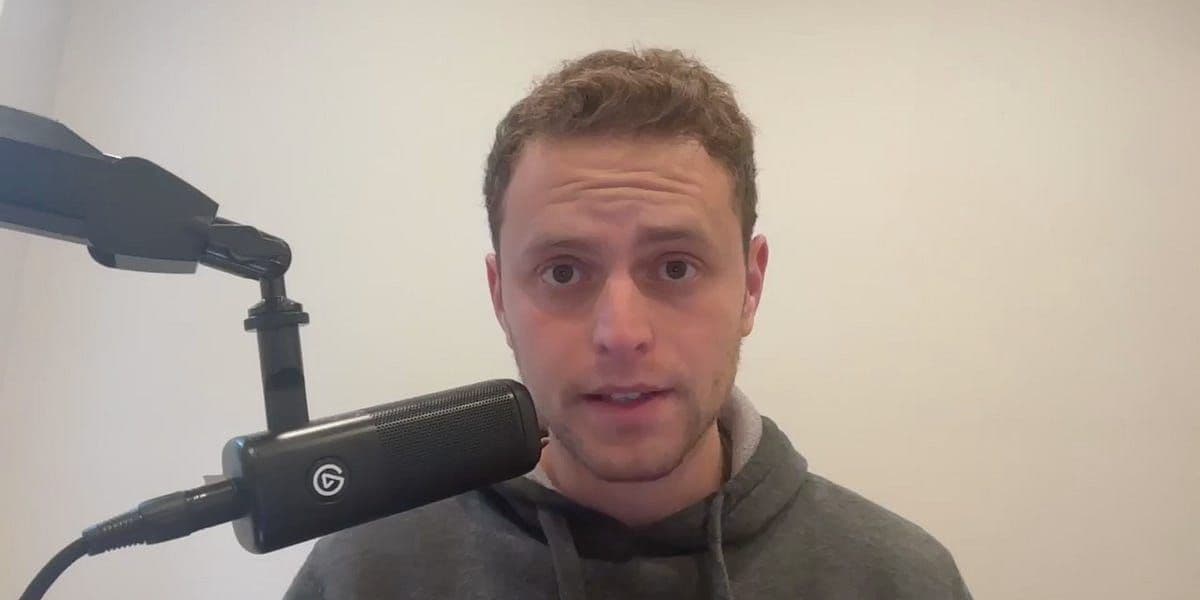
Good afternoon, everyone. I know I sound like a broken record, but once again it’s been an extraordinarily busy — and deeply troubling — news day. And once again, the First Amendment is under direct attack.
Today, the Trump administration escalated its war on free speech. The FCC chair openly threatened to revoke the licenses of ABC affiliates unless Jimmy Kimmel is suspended or cancelled. At the same time, Trump’s Deputy Attorney General defended the idea of charging peaceful protesters under racketeering laws — treating dissent as if it were organized crime.
I’ve said this before, and I’ll say it again: there has never been a scarier time to be a journalist in America. The threats I receive are real and personal — but the greater danger is to the very foundation of our democracy. Lawsuits designed to intimidate. Politicians trying to silence critics. An administration willing to weaponize government power against voices it doesn’t like.
This is a dark chapter in the history of the First Amendment — and the only way through it is to fight back, together. If you believe in a free press, if you believe in truth over fear, then I need your support. Subscribe today. Stand with me. And let’s keep defending the truth — no matter how loud the attacks become.
Subscribe
With that, here’s what you missed:
- FCC Chair Brendan Carr harshly criticized Jimmy Kimmel for calling Charlie Kirk’s suspected shooter a MAGA Republican, suggesting ABC affiliates could face license reviews if such “news distortion” continued.
- In an interview with YouTuber Benny Johnson, Carr said affiliates risk license revocation if they keep airing Kimmel’s show without changes, floated the possibility of suspension or firing, and invoked the FCC’s public interest rules.
- Carr linked his warning to broader Trump-era media shake-ups — including Colbert’s Late Show cancellation, defunding of NPR and PBS, and pressure on CBS News — arguing that Disney (ABC’s parent company) must rein in Kimmel.
- Deputy Attorney General Todd Blanche defended Trump’s suggestion of prosecuting D.C. protesters under RICO, framing disruptions at the president’s dinner as potentially “organized efforts” to inflict harm, while critics like CODEPINK called it an intimidation tactic against free speech and part of a broader Trump administration crackdown on left-wing ygroups after Charlie Kirk’s assassination.
- The family of 21-year-old Trey Reed, a Black student found hanging from a tree at Delta State University in Mississippi, has hired civil rights attorney Ben Crump and others to demand an independent investigation, disputing officials’ early conclusion of no foul play in a state with a painful history of lynching; attorneys are pressing for transparency, video evidence, and answers as the full autopsy proceeds.
- Barack Obama, responding to the assassination of Charlie Kirk, condemned political violence as a threat to democracy and criticized Donald Trump for deepening divisions by rushing to “identify an enemy,” warning that White House rhetoric and norm-breaking actions mark a dangerous moment while urging Americans to defend debate, respect, and democratic guardrails.
- House Republicans proposed $88m in new security for lawmakers, judges, and top officials after Charlie Kirk’s killing, but tied the funding to a stopgap bill to avert a shutdown; Democrats insist on adding healthcare measures like ACA subsidies and Medicaid protections, setting up a partisan standoff that risks closing the government despite bipartisan agreement on the need for security.
- Former CDC officials Susan Monarez and Debra Houry testified that Robert F Kennedy Jr, with White House backing, pressured them to weaken vaccine policies, fired or forced out career experts, and censored science—actions they warn could restrict children’s access to vaccines, fuel preventable disease outbreaks, and undermine public health, prompting senators to call it a dangerous political assault on science.
- FBI Director Kash Patel endured a combative House Judiciary hearing dominated by fights over the Epstein files, with Democrats accusing him of a Trump-aligned “cover-up,” pressing him on Trump’s name appearing in the records, and clashing over a purported “birthday book” letter.
- Patel denied there were compromising photos of Trump, deflected blame to past prosecutors like Alex Acosta, and was noncommittal about meeting Epstein victims, while GOP members largely praised his leadership and shifted focus to immigration and China.
- The committee’s Republican majority blocked Democratic subpoenas seeking bank and Treasury records tied to Epstein’s finances, heightening accusations of stonewalling.
- The US Federal Reserve cut interest rates for the first time since December, lowering them to 4–4.25% to address a slowing labor market amid rising inflation from Trump’s tariffs, though the move drew criticism from Trump for being too small and late, while internal Fed disputes and political tensions highlight growing risks of unemployment, inflation, and potential stagflation.
- Erika McEntarfer, the former Bureau of Labor Statistics chief fired by Donald Trump after releasing revised jobs data, warned that the president’s unprecedented move threatens the independence of key economic institutions, likening it to “messing with traffic lights,” and cautioned that undermining trust in official statistics could trigger economic crises, higher inflation, and borrowing costs.
- Treasury Secretary Scott Bessent was reported to have made dual “principal residence” pledges on mortgages in 2007, similar to the allegations Trump cites in trying to oust Fed governor Lisa Cook, though experts say Bessent’s filings showed no wrongdoing—highlighting political tensions as Trump pushes a first-ever removal of a Fed governor over disputed mortgage claims.
- A new report found that ICE placed more than 10,500 people in solitary confinement between April 2024 and May 2025, with use of the practice sharply accelerating under Trump’s mass deportation agenda; researchers warn the prolonged isolation of vulnerable detainees amounts to psychological torture, reflects systemic retaliation, and risks catastrophic human rights abuses as detention capacity and funding expand.
- Harjit Kaur, a 73-year-old Bay Area grandmother who has lived in the U.S. for over 30 years and regularly checked in with ICE for more than a decade, was suddenly detained amid Trump’s mass deportation push, sparking protests; her attorney and supporters highlight her poor treatment in custody and lack of criminal record, calling her detention a cruel example of misplaced immigration enforcement priorities.
- The Israeli military intensified its ground offensive into Gaza City, striking hospitals and residential areas while urging civilians to flee south despite famine and insecurity, with UN officials warning of looming humanitarian collapse; critics, including Israeli security figures, doubt the offensive’s military goals and see political motives, while far-right ministers openly discuss Gaza’s destruction as a “real estate bonanza.”
- Multiple officers were injured — at least two in serious condition — during a warrant-related shooting in North Codorus Township, Pennsylvania, prompting a major law enforcement response and hospital lockdowns, with state and federal agents now investigating.
- South Park creators Matt Stone and Trey Parker postponed a new episode hours before airtime, admitting they missed the deadline, with the episode rescheduled for Sept. 24; the delay follows a season marked by satire of Donald Trump, Paramount’s $16M settlement with him, and controversy over an episode referencing Charlie Kirk, which was pulled from reruns after his assassination.
- Senate Democrats introduced a bill to restore NOAA’s billion-dollar disaster database, shut down by the Trump administration in May amid climate research cuts, requiring updates twice a year to track the rising costs of extreme weather — though its passage faces slim odds in a GOP-controlled Senate.
- Trump’s Justice Department moved to strike down Vermont’s Climate Superfund Act, which makes major polluters pay for climate damages, calling it unconstitutional; Vermont and allied groups vow to defend the law as a legitimate state effort to hold Big Oil accountable, while critics say the administration’s lawsuit is part of a sweeping rollback of climate regulations.
- The Times reported that the UK will formally recognize a Palestinian state once President Trump’s state visit concludes, a move signaling a major diplomatic shift likely to reverberate across U.S.-UK relations and Middle East peace efforts.
See you in the morning.
— Aaron