



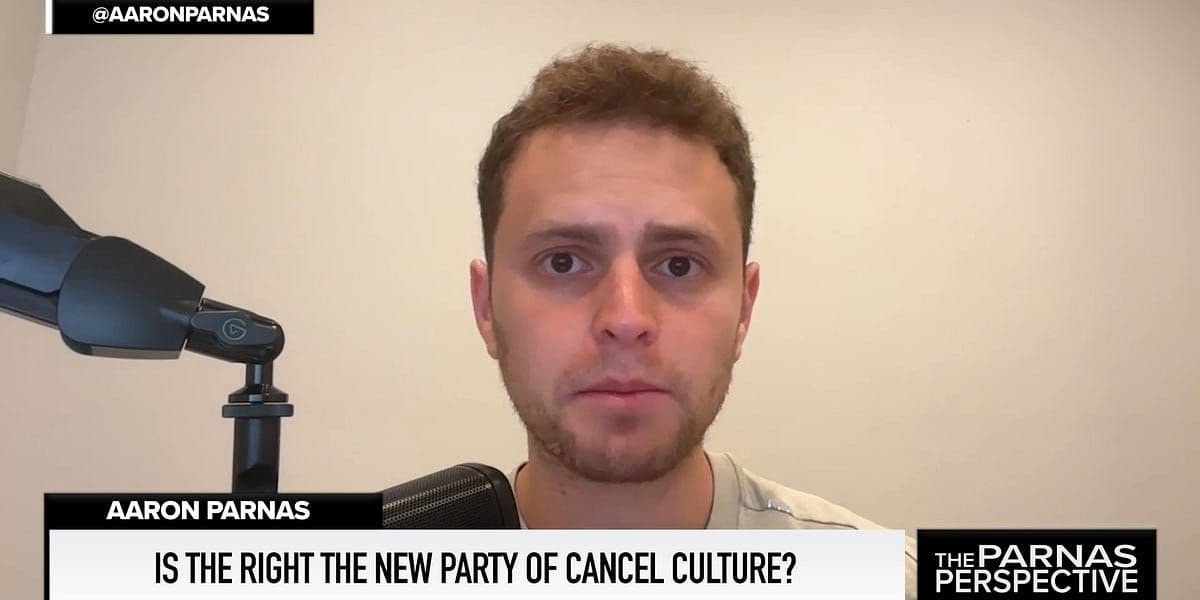
I don’t normally write lengthy articles, but tonight, I had to because something sinister is brewing in America right now. What was once denounced as a scourge by conservatives — the practice of “cancel culture” — is making a comeback. But this time, it’s being wielded by the very voices who once cast it as an existential threat to free speech.
And unlike before, this new wave of cancel culture is not framed in the language of accountability or social justice. Instead, it is being masked in the rhetoric of government power, corporate compliance, and partisan punishment. At its center is a glaring irony: conservatives who once railed against deplatforming and censorship are now embracing the same tactics they spent years condemning.
When I warn that the First Amendment is under attack in ways we haven’t seen before, I don’t say it lightly. It is now genuinely frightening to be a journalist. Here’s my promise: I am independent because I refuse to answer to powerful donors, corporate interests, or political pressure. Subscribe today and support my continued work.
For years, Republicans positioned cancel culture as a threat to open debate and the First Amendment. Figures like Donald Trump, Ted Cruz, and Tucker Carlson made a career out of blasting “woke mobs” for destroying livelihoods over politically incorrect speech. But in the wake of conservative activist Charlie Kirk’s killing, the right has shifted its tune. Suddenly, the same tactics they once labeled as censorship are now being celebrated.
Today, Trump openly admitted that networks are not allowed to cover him in a negative light, and if they do, their licenses could be revoked. “They’re 97% against, they give me wholly bad publicity...I mean, they’re getting a license, I would think maybe their license should be taken away,” Trump said.
He continued: “When you have a network and you have evening shows and all they do is hit Trump, that’s all they do...They’re licensed. They’re not allowed to do that.” His statement concluded with perhaps the most chilling line of all: “They’re getting a license. I think maybe their license should be taken away.” In a single conversation on Air Force One, the President confirmed what critics have long feared: the use of government licensing power to control or silence negative coverage.
Social media campaigns are targeting workers who mocked Kirk’s death, with employees at major companies — including American Airlines and Nasdaq — being suspended or fired after online comments were flagged to employers. What once was criticized as a dangerous “speech-policing mob” has now been adopted as a political weapon. The principle of defending speech no longer seems universal — it has become conditional, depending on which side you are on.
The hypocrisy becomes clearer when you compare how cancel culture is applied depending on the political affiliation of the speaker. Take Fox News host Brian Kilmeade, who sparked outrage after suggesting that homeless people with mental illness should be executed.
The backlash was swift, and while Kilmeade offered a limited apology, critics pointed out that it did not renounce the dehumanizing sentiment. Many seized on the moment as evidence of broader right-wing hostility toward the poor and mentally ill. But did Kilmeade lose his job? Was he deplatformed? No. He remains on air, collecting millions from Fox News. For conservatives, cancel culture doesn’t seem to extend to their own — it only applies to their political opponents. This selective enforcement undermines the very idea of a consistent principle. The outrage is not about defending free speech. It’s about punishing the other side.
While grassroots campaigns target individuals, the federal government has begun playing a larger role in the cancel culture wars. In the past 24 hours, FCC Chairman Brendan Carr — a Trump appointee — has escalated efforts against media figures critical of the right. Carr, who previously pushed ABC to suspend Jimmy Kimmel Live!, has now succeeded in taking Jimmy Kimmel off air indefinitely.
Even more troubling, he has floated the idea of reviewing The View’s status as a bona fide news program. If the FCC reclassifies the daytime talk show, it could be subjected to “equal-time” rules — a bureaucratic mechanism that could force networks to give airtime to pro-Trump voices whenever his critics speak.
This represents a dangerous shift: not just private-sector campaigns but actual government intervention aimed at silencing or balancing political speech. The same conservatives who once said government should stay out of media now appear eager to use federal power as a censorship tool.
The ripple effects extend beyond media and government. Private companies are being pulled into the culture wars, facing pressure to punish employees for their political speech online.
In the hours after Kirk’s death, coordinated campaigns flagged offensive posts, leading to firings and suspensions across multiple industries. This marks a new wave of workplace controversies where political allegiances determine whether someone keeps their job.
Even Starbucks found itself caught in the crossfire. After a viral TikTok showed a barista refusing to write “Charlie Kirk” on a cup, the company clarified its policy: customers are free to use Kirk’s name in orders. Starbucks quickly distanced itself from the employee’s actions, revealing the delicate balance corporations now face between worker autonomy and public political backlash. The result is an environment where companies — eager to avoid scandal — serve as enforcers of partisan cancel campaigns.
What’s happening in America right now is not just the return of cancel culture — it’s its transformation. Once seen as a tool of progressives, it is now weaponized by conservatives, corporations, and even federal agencies. The result is a system where free speech protections no longer apply universally. Instead, they are selectively invoked. Critics of the right face career-ending consequences, while conservative figures are shielded from accountability.
This isn’t just hypocrisy — it’s the institutionalization of a double standard. It reveals that the fight was never really about free speech in the abstract. It was always about power: who gets to speak, who gets silenced, and who controls the conversation. And right now, that power is being consolidated through fear, firings, and federal oversight.
Cancel culture, once derided as a left-wing threat to democracy, has been rebranded and embraced by the right. It now operates as a partisan weapon, applied selectively and enforced through corporate compliance and government authority. What’s at stake is not just ideological consistency but the very idea of free expression.
If speech is only defended when it comes from your side, then free speech ceases to exist in practice. It becomes a privilege, not a principle. Something sinister is indeed brewing in America. The question is whether the country will recognize that the real danger is not who is being canceled, but the growing acceptance of cancel culture as a tool of political power.