



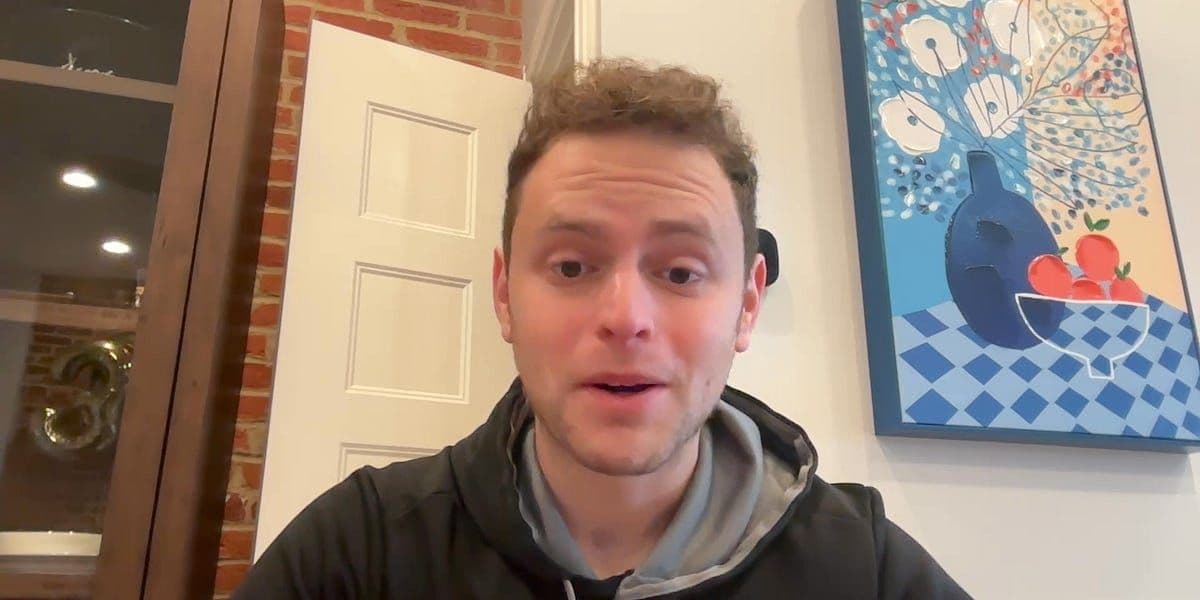
Good morning, everyone. As is tradition, we are starting Sunday with a good news update only. I would be remiss, however, if I shared this update without first acknowledging two horrific pieces of news.
First, our nation was shaken by a mass shooting at Brown University that left two people dead and nine other students injured. Second, the world woke up this morning to news of a mass shooting targeting a Hanukkah celebration at Bondi Beach. Officials are labeling it a terrorist attack, with more than eleven people killed and dozens injured. There is real hate in this world, and this morning my prayers are with all those impacted.
I am going to spend the rest of this update focused only on good news, because that is our tradition here at the Parnas Perspective. If you can, comment one piece of good news that happened to you this week and share this so others can do the same.
For me, the good news was small but meaningful. My wife threw me a small party with friends to celebrate being named to Forbes 30 Under 30. She had all my favorites: sour candy, thin crust pizza, and Caesar salad. It was a great evening.
In another piece of good news, we are breaking through even as other social media platforms censor me. People have come up to me and told me they now read this Substack the way they used to read the newspaper. Thank you to everyone who has subscribed and helped make this possible. If you have not yet subscribed, please consider doing so and help us reach our end of year goal.
Here’s what you missed:
- During today’s horrific terrorist attack at Bondi Beach, Ahmed el Ahmed, a 43-year-old Sydney father of two and fruit business owner, courageously ran toward danger, wrestled a rifle from an alleged gunman despite having no firearms experience, likely saving lives, and was later shot in the arm and hand and hospitalized, drawing praise from national and state leaders for his bravery. We pray for his quick recovery. He single handily saved lives today:
- An emotional video captures 11-year-old Ava, born with multiple heart defects and after spending more than 200 days awaiting a donor at Cleveland Clinic Children’s Hospital, joyfully telling her father she is getting a new heart; following heart failure triggered by an infection, she received a successful transplant in March 2025 and was able to return home after eight months in hospital.
- Amateur astrophotographer Valter Binotto captured rare, massive red “ELVES” rings—upper-atmospheric lightning events—over his hometown of Possagno, Italy, marking his second and third such sightings from the same location, including one extraordinary image that also recorded a rare red sprite triggered by powerful lightning hundreds of kilometers away.
- A U.S. Navy veteran named Tim regained custody of his young daughter after receiving a tiny home through the Veterans Community Project, which gave him a permanent address, enabled family reunification, and supported his transformation from homelessness and long-term addiction into a stable life as a licensed drug counselor and devoted father.
- Conservation efforts along India’s west coast have driven a dramatic rebound in olive ridley sea turtles, with roughly 1 million nests counted this year—ten times more than two decades ago—thanks to protected beaches, fishing bans, hatcheries, and community programs like the Velas Turtle Festival that help safeguard eggs and guide hatchlings safely to the sea.
- After losing all her limbs to sepsis eight years ago, Kim Smith is celebrating new independence thanks to a successful left-hand transplant that she says feels completely natural, allowing her to write, do daily tasks, and regain confidence, while she expresses deep gratitude to her donor’s family and continues an inspiring recovery highlighted in a new documentary.
- A long-term study of more than 3,000 adults found that diets high in polyphenol-rich foods like tea, coffee, berries, nuts, cocoa, whole grains, and olive oil were linked to healthier blood pressure and cholesterol levels and slower increases in cardiovascular risk with age, suggesting that even small, consistent dietary shifts can meaningfully support long-term heart health.
- Once declared Extinct in the Wild, the scimitar-horned oryx is now thriving again in the Sahara thanks to decades of captive breeding by zoos, private ranchers, and conservation programs, with reintroduced herds in Chad, Tunisia, and Morocco growing from zero to roughly 600 genetically diverse animals; this remarkable recovery was made possible by early rescue efforts in Texas, the meticulous global studbook maintained at Marwell in the UK, and coordinated international releases beginning in 2016 that have transformed the species from a conservation loss into an “Endangered” success story.
- Danish scientists discovered a tiny genetic switch that allows plants to accept nitrogen-fixing bacteria instead of fighting them, a breakthrough that could one day let major cereal crops like wheat, barley, and maize fertilize themselves; by altering just two amino acids in a root receptor protein, researchers turned an immune-response signal into a symbiotic one, successfully enabling nitrogen fixation in laboratory barley—a development that could dramatically cut global fertilizer use, energy consumption, and emissions if extended to other staple crops.
- A British engineer repurposed the lithium-ion batteries from 500 discarded disposable vapes to build a 2.5 kWh home battery pack capable of powering his entire house for eight hours, showcasing the wastefulness of single-use vapes and the value of reused components; after months of collecting, testing, and wiring the cells into a safe, fused, 3D-printed system, he documented the process in a viral video and now plans to integrate solar charging—demonstrating how e-waste can be transformed into practical clean-energy solutions.
- A phase 3 trial of 126 children and teens with spinal muscular atrophy found that a single intrathecal dose of the gene therapy onasemnogene abeparvovec enabled major motor gains like standing, walking, and climbing stairs in patients previously considered untreatable, suggesting the U.S.- and EU-approved therapy could be expanded beyond infants if longer-term safety is confirmed.
- A critically endangered North Atlantic right whale first sighted off Ireland in 2024 has now been identified in Boston Harbor, marking an unprecedented trans-Atlantic movement for the species and adding to a series of rare long-distance journeys that scientists say may reflect whales searching for new suitable habitat as the population slowly recovers.
- Scientists have documented more than 16,000 theropod dinosaur footprints at Bolivia’s Carreras Pampas, the largest single tracksite ever recorded, offering rare insight into dinosaur movement, migration, gait, and behavior thanks to densely layered trackways preserved from the late Cretaceous.
- Singing offers broad health benefits—from stress reduction and improved heart and immune function to stronger emotional bonds—but these effects are even greater when people sing together, as group singing activates calming neural pathways, boosts endorphins, strengthens social connection, and aligns with humans’ deeply social evolutionary nature.
- A specially modified “dancing wheelchair” has allowed 11-year-old Desa Kaiser, who is paralyzed from the waist down after a car crash, to return to the dance floor, helping her rebuild strength, confidence, and self-expression as she embraces being “cool” and unique while continuing rehabilitation at Shriners Children’s Hospital.
- After a six-year closure caused by landslides and erosion, the South Unit Scenic Road in Theodore Roosevelt National Park has reopened following a $51 million reconstruction funded largely by the Great American Outdoors Act, restoring one of the Midwest’s most scenic drives while improving safety, drainage, and long-term access to a park that draws hundreds of thousands of visitors each year.
See you in a little bit.
— Aaron