



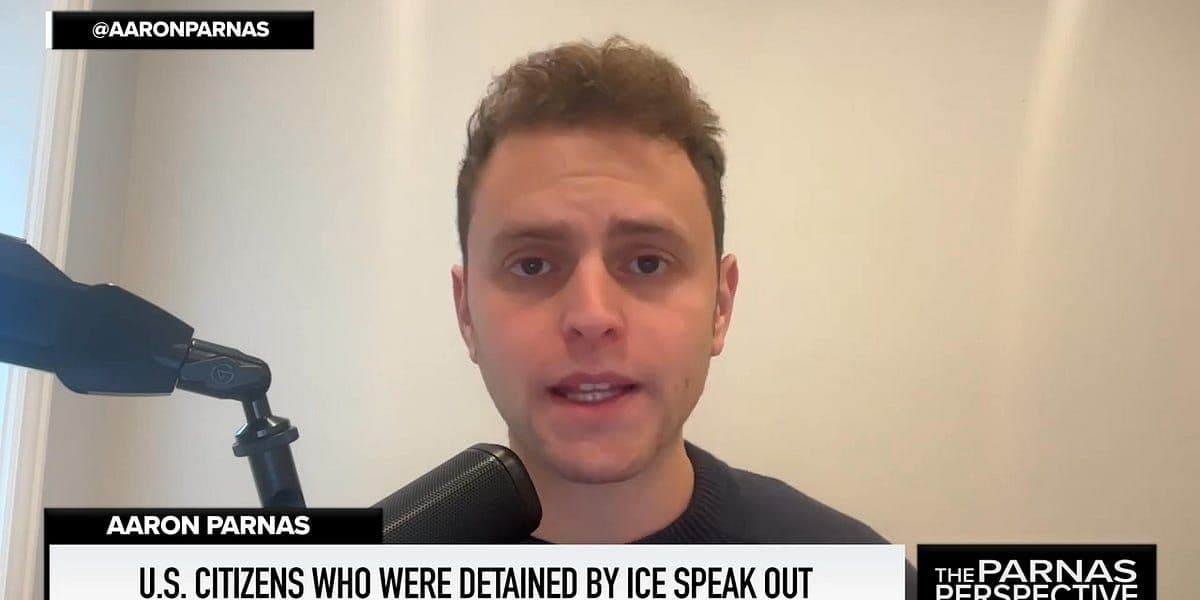
Since the start of Donald Trump’s second term, more than 170 United States citizens have been unlawfully detained by immigration authorities. Among them are two Angelenos—Andrea Velez and Javier Ramirez—whose lives were upended when Immigration and Customs Enforcement agents took them into custody despite clear proof of their citizenship.
I sat down with both of them to discuss what they endured inside federal detention, how ICE targeted them because of the color of their skin, and why the trauma of those days still lingers. I’m able to bring you these conversations because of your support. Subscribe today to help ensure this reporting continues.
THE DETENTION OF ANDREA VELEZ: A CITIZEN IGNORED
On June 24, in the middle of downtown Los Angeles, Andrea Velez was dropped off at work by her mother and sister. Federal immigration agents were already in the area. Within moments, Velez was on the ground.
According to her account, someone grabbed her and slammed her to the pavement. The individual—later identified as a federal officer in plain clothes—accused her of interfering with an arrest. Velez attempted to assert her citizenship, but the officer dismissed her. Instead of verifying who she was, he escalated the encounter, seizing her and placing her under arrest.
What followed should alarm every American.
Velez was taken to a detention center where she immediately provided officers with her driver’s license and health insurance card, both confirming her identity. Yet she was still booked into jail. The system moved forward as if her proof meant nothing, as if the fact of her citizenship was irrelevant to the machinery of detention already in motion.
She remained in custody for two full days. For the first 24 hours, she reports she had nothing to drink. Her case was eventually dismissed without prejudice, a procedural decision that ended her immediate legal jeopardy but provided no accountability for the wrongful detention itself.
Velez left the facility physically free but psychologically shaken. The ordeal has prevented her from returning to her workplace—the scene of her arrest—and has left her struggling with lasting trauma. Her experience, like those of many other wrongfully detained citizens, illustrates how easily immigration enforcement can override even the most basic evidentiary safeguards.
THE CASE OF JAVIER RAMIREZ: DETAINED, DISBELIEVED, AND LEFT IN FEAR
Just twelve days before Velez’s detention, federal immigration agents descended on a tow yard in Montebello where Javier Ramirez was working. According to Javier, agents accused him of attempting to run toward them and resisting arrest. Ramirez maintains that he clearly identified himself as a U.S. citizen during the encounter, but that the agents continued with the arrest anyway.
He was taken away in an unmarked vehicle. The public became aware of the incident only because video of the detention circulated widely on social media—a rare window into how quickly and quietly such arrests can occur when immigration agents are operating in everyday spaces.
Ramirez’s family could not locate him for 22 hours. During that time, he remained in federal custody, entirely cut off from his home, work, and support network. It took four additional days before he appeared in federal court. Like Velez, his case was ultimately dismissed without prejudice, leaving unresolved the reality that he was detained in the first place despite being a U.S. citizen.
Since then, Ramirez has described living with persistent fear and hypervigilance, constantly scanning his surroundings. His encounter with immigration agents fundamentally altered his sense of safety in the country he was born into—an impact that extends far beyond the walls of any detention facility.
What happened to Velez and Ramirez did not occur in a vacuum. Over the past several years, civil rights organizations, journalists, and federal oversight bodies have documented a steady rise in cases where American citizens—often Latino, often people of color—are detained by immigration authorities who fail to perform even minimal verification checks.
Despite carrying legal identification, both Velez and Ramirez were treated first as suspects, then as detainees, and only much later as citizens—after the harm had already been done.
The tally of more than 170 U.S. citizens detained, just since the start of Trump’s second term, represents far more than a statistic. Each number is a life disrupted. A family thrown into crisis. A person forced to prove their Americanness while sitting in a concrete cell.
Velez and Ramirez are not unusual cases. They are typical of a pattern that civil liberties groups have been warning about for years: a system that has grown more aggressive, less accountable, and increasingly comfortable treating entire communities as suspect before proven otherwise.
Their experiences raise urgent questions about what it now means to be a U.S. citizen in an era when citizenship alone no longer guarantees freedom from immigration enforcement.
Stories like those of Andrea Velez and Javier Ramirez illuminate truths the public is rarely shown. They expose not only individual injustices but the structural failures that allow such injustices to occur.
This work takes time, persistence, and resources. If you believe these stories matter—if you believe wrongful detention of citizens is a crisis that demands attention—please subscribe today. Your support makes it possible to document these abuses, amplify the voices of those harmed, and hold the system accountable.