



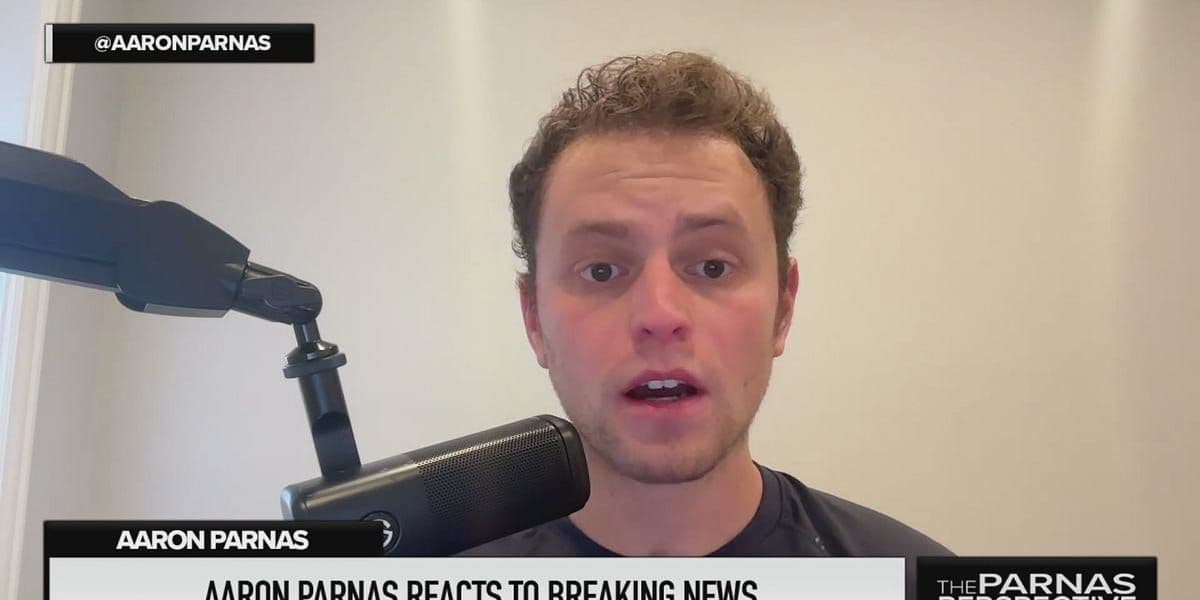
We have breaking news right now. The White House confirmed today that a second strike occurred during a September operation against what officials described as a drug-carrying vessel in the Caribbean. The acknowledgment sharply escalated concerns among lawmakers and military legal experts, who warn that the action—if accurately described in recent reporting—could constitute a grave breach of international law, potentially rising to the level of a war crime or unlawful killing.
Right now the White House wants this story buried. I will not allow that to happen. I am going to work around the clock to uncover the full truth, because the administration has now confirmed that the disputed second strike did in fact occur, and that strike raises the real possibility of a war crime The next question is who ordered it and who knew.
As a journalist, I refuse to stop. I refuse to look away. And I refuse to let anyone in the White House pressure me into silence. If you value independent reporting that will not back down, subscribe to support my work.
In a tense back-and-forth with reporters, White House Press Secretary Karoline Leavitt directly acknowledged the second strike, a critical detail at the center of the Washington Post’s reporting.
Reporter: Does the administration deny that the second strike happened, or does the administration deny that Secretary Hegseth gave the order?
Leavitt: The latter is true.
Reporter: Admiral Bradley was the one who gave that order for a second strike?
Leavitt: And he was well within his authority to do so.
Leavitt’s exchange amounted to the administration’s first on-record confirmation that the debated follow-on strike occurred, even as she rejected the Post’s allegation that Defense Secretary Pete Hegseth personally authorized it.
The Washington Post had reported that Hegseth issued an extraordinary instruction: a follow-on strike allegedly intended to kill survivors of a destroyed vessel suspected of narcotics trafficking. Hegseth has denounced the article as “fabricated, inflammatory, and derogatory.” But now, the White House is confirming the reporting.
Yet lawmakers across the political spectrum warned that—if the underlying facts are verified—the actions described would fit the legal definition of a war crime.
Donald Trump yesterday even said he would not have the second strike to happen:
Senators Chris Van Hollen and Tim Kaine, both on the Senate Foreign Relations Committee, stressed that the conduct outlined in the reporting would be illegal.
Kaine told Face the Nation: “This rises to the level of a war crime if it is true.”
Sen. Mark Kelly told CNN that the alleged order, if real, was “clearly not lawful,” while Sen. Ed Markey went further, accusing Hegseth of being “a war criminal” based solely on the Post’s unverified account.
A coalition of former senior military lawyers—the Former JAGs Working Group—issued a searing rebuke Sunday, stating that both issuing and carrying out such orders would constitute war crimes, murder, or both, if the reporting is accurate. Their statement referenced the alleged September 2, 2025 incident, in which a vessel carrying eleven civilians was nearly obliterated in the initial strike. According to reporting, surveillance then detected two survivors clinging to debris before the second strike killed them.
The group warned:
- If the operation qualifies as a non-international armed conflict, an order to deliberately kill survivors would be a war crime under international law.
- If it does not qualify as armed conflict, the intentional killing of helpless civilians at sea would constitute murder under U.S. federal law.
They urged Congress to investigate and called on military personnel to refuse any such “patently illegal orders.”
Leaders of the Armed Services Committees—Sens. Roger Wicker and Jack Reed—announced a bipartisan investigation into the matter, promising “vigorous oversight.”
As lawmakers demand answers and former prosecutors describe the allegations as unprecedented, the controversy is accelerating. While Leavitt confirmed the occurrence of the second strike, the central unresolved question remains whether senior defense officials knowingly ordered lethal force against survivors—a determination that will carry profound legal and political consequences.
Congressional investigations and potential legal reviews appear inevitable. Until then, the episode is likely to dominate debates over U.S. military conduct, civilian oversight, and the future of Pentagon leadership.