



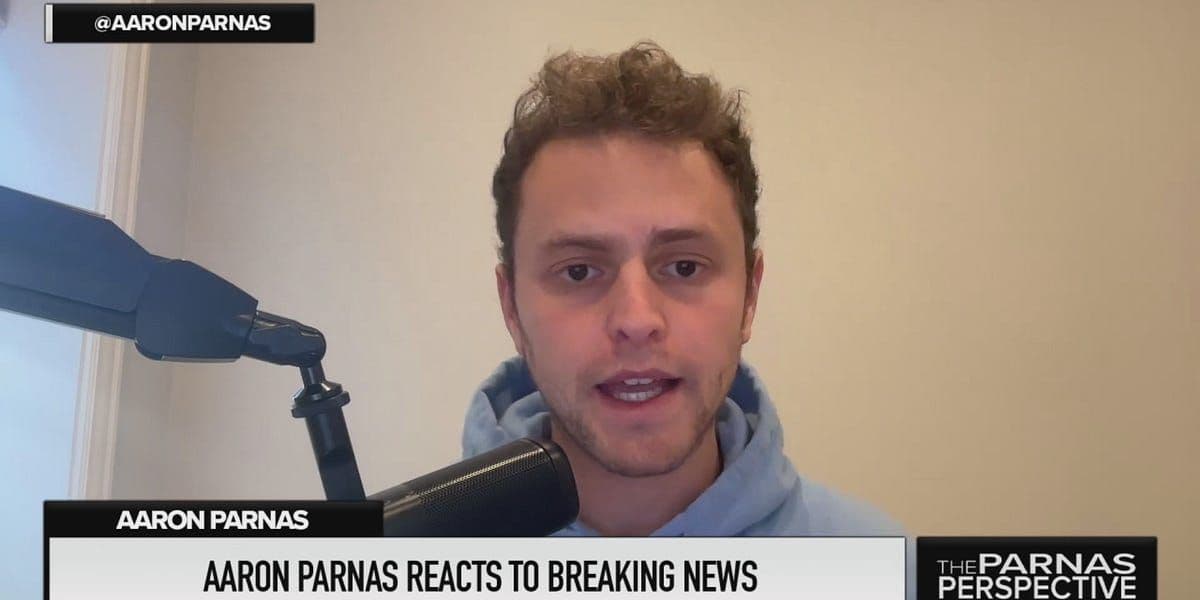
Apologies for the back to back emails, but we have massive news right now. In a dramatic legal turn, a federal court in the Eastern District of Virginia has dismissed the indictment against former FBI Director James Comey, holding that his prosecution was tainted by the improper appointment of the interim U.S. Attorney who brought the case. Minutes ago, the court found that the appointment of Acting U.S. Attorney Lindsey Halligan, a former personal attorney to President Donald Trump, violated both the statutory scheme for interim U.S. Attorney appointments and the Appointments Clause of the U.S. Constitution.
Because Halligan was the only federal official who signed Comey’s indictment, the court held that all acts flowing from her defective appointment were void, including the indictment itself. This decision also means that the separate prosecution of Letitia James, the New York Attorney General, will also be dismissed without prejudice unless it is refiled under a proper appointment. However, the statute of limitations in Comey’s case has expired, which prevents any future charging.
The ruling centers on two issues: the statutory limits on interim U.S. Attorney appointments set forth in 28 U.S.C. § 546, and the constitutional requirements of the Appointments Clause.
Under § 546, when a U.S. Attorney position becomes vacant, the Attorney General may appoint an interim U.S. Attorney for up to 120 days. If a Senate confirmed U.S. Attorney has not been appointed when that period ends, the district court may appoint one. In this case, Halligan’s appointment followed a previous interim appointment, raising the question of whether the Attorney General had the authority to appoint a second interim U.S. Attorney.
The Appointments Clause analysis draws heavily on Supreme Court precedent. In Ryder v. United States, the Court ordered a new hearing before a properly appointed panel after finding the original panel improperly constituted. In Lucia v. SEC, the Court held that the remedy for an adjudication tainted by an appointments violation is a new hearing before a properly appointed official. In Nguyen v. United States, the Court vacated decisions issued by an improperly composed appellate panel and required fresh consideration. The district court applied these principles and concluded that Halligan’s appointment was unlawful and that all actions she performed were invalid.
The court issued the following findings and remedies:
- The appointment of Lindsey Halligan as interim U.S. Attorney violated 28 U.S.C. § 546 and the Appointments Clause of the U.S. Constitution.
- All actions resulting from Halligan’s defective appointment, including securing and signing James Comey’s indictment, were unlawful exercises of executive power and are set aside.
- The Department of Justice’s attempt to ratify Halligan’s appointment was ineffective and is set aside.
- James Comey’s motion to dismiss the indictment is granted.
- The indictment is dismissed without prejudice.
- Until a U.S. Attorney is nominated by the President and confirmed by the Senate, the authority to appoint an interim U.S. Attorney for the Eastern District of Virginia rests with the district court.
Because the statute of limitations has expired, Comey cannot be charged again for the same conduct. For Letitia James, where the statute of limitations remains open, prosecutors may refile the case once a properly appointed U.S. Attorney is in place.
This decision is significant for several reasons:
- Constitutional structure: It reinforces that the Appointments Clause is a fundamental protection of the separation of powers.
- Prosecutorial legitimacy: It underscores that criminal prosecutions must be brought by properly appointed officials to maintain public confidence in the justice system.
- Ripple effects: Other matters initiated during Halligan’s tenure may now face challenges, which could expand the impact of this ruling far beyond the Comey and James cases.
Read the full order here.