



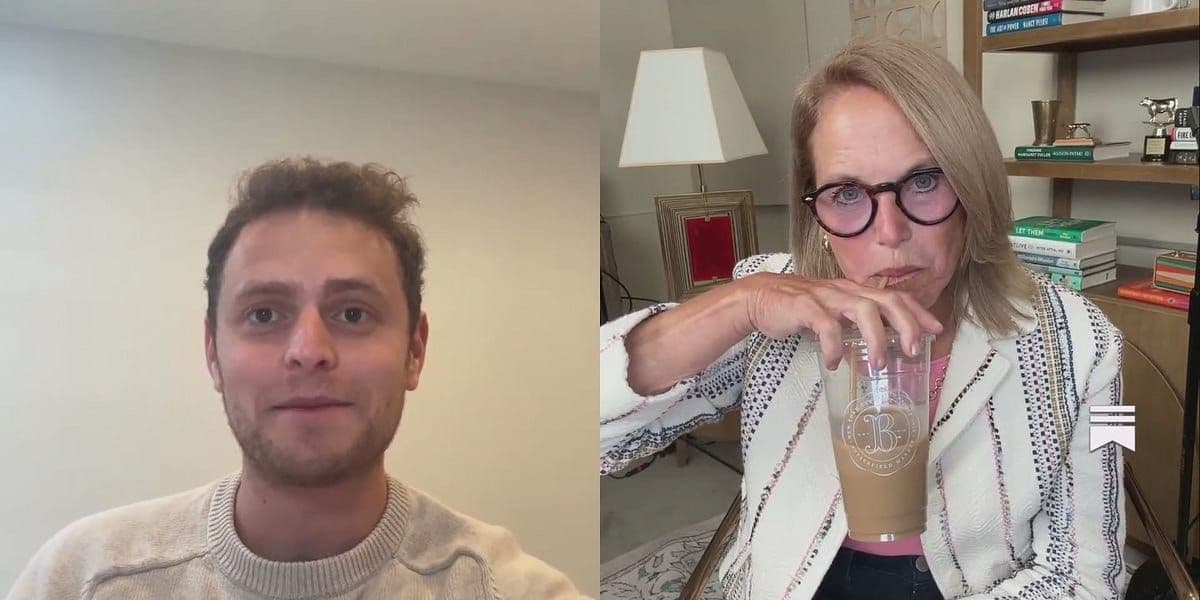
This afternoon, I had the privilege of going live and interviewing Katie Couric for more than 35 minutes. For me, it was more than an interview — it was an encounter with one of my greatest inspirations in the journalism profession. Katie has long been a figure I look up to, someone whose work I study to sharpen my own craft. I often listen back to her interviews, not only for their substance but also for the artistry in how she asks questions, listens deeply, and follows up with curiosity and clarity.
Conversations like this are exactly why I’ve started leaning into more long-form interviews — to give space for stories, context, and perspective that you won’t always find in quick soundbites. If you want to keep up with these kinds of conversations, I’d love for you to subscribe and be part of this growing community. You all helped make this interview happen today, and I am so grateful for it.
Subscribe
Our conversation was wide-ranging, beginning with Katie’s life and background. She spoke candidly about her journey — from breaking into the industry at a time when women in major news roles were rare, to navigating deeply personal challenges while maintaining a career in the public eye. What stood out most was her resilience: her ability to transform personal hardship into platforms for change and her consistent drive to make journalism both impactful and empathetic.
We also explored how journalism has changed over the past 15–20 years. Katie reflected on the era of network dominance, when television news shaped the national conversation, and contrasted it with today’s fractured digital landscape. The rise of social media, the shrinking of traditional newsrooms, and the speed of the news cycle have transformed how stories are told — and how they’re consumed. Yet, as she emphasized, the core of journalism remains the same: seeking truth, holding power accountable, and telling stories that matter.
Naturally, the conversation turned toward politics and the coverage of Donald Trump. Katie shared perspective on the challenges journalists faced during Trump’s first presidency — from dealing with an administration openly hostile to the press to navigating a polarized media environment. We then discussed the current moment, what I referred to as “Trump 2,” and how the lessons from the past may (or may not) shape the way journalists approach this new chapter. Her insights underscored the responsibility of reporters to balance fairness with fearlessness, never shying away from facts even when they are inconvenient or unpopular.
Toward the end of our conversation, I asked Katie what legacy she hoped to leave behind. Her answer was powerful. Beyond her groundbreaking work in journalism, she spoke about her fight for cancer research and her mission to raise awareness and funding for cures — a cause born out of personal tragedy but transformed into a lifelong commitment. It was a reminder that the most lasting legacies are often built at the intersection of the personal and the professional, where passion fuels purpose.
For me, interviewing Katie Couric wasn’t just a professional milestone — it was a masterclass. I walked away reminded that journalism, at its best, is a calling rooted in curiosity, courage, and compassion. Katie embodies all three, and speaking with her reaffirmed why I chose this path in the first place.